

Insights
How Much Does Every Customer You Lose to Wait Times Actually Cost?
Tom Järvheden · 9 June 2026 · 5 min read
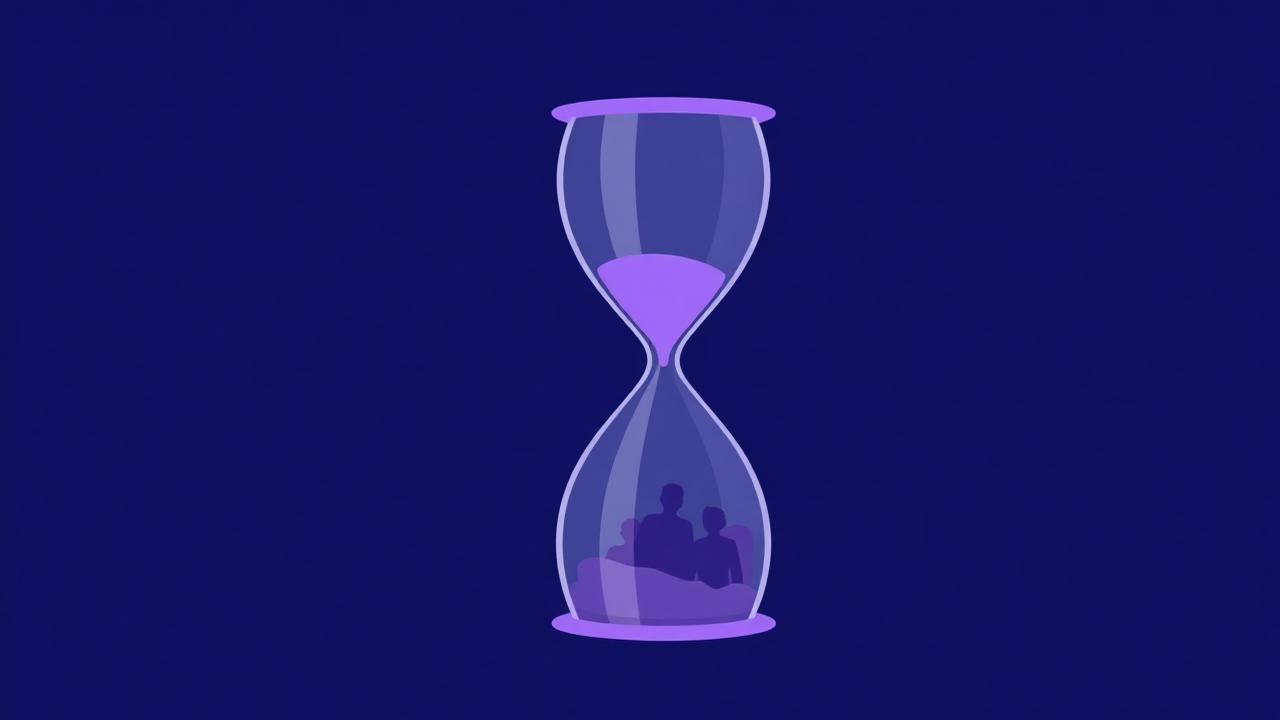
Every second a customer stares at a loading icon or waits for a reply in chat is a direct cost to your business. It's not just about momentary irritation. It's about the exact moment a potential buyer closes the tab, deletes their cart and never comes back.
Every second a customer stares at a loading icon or waits for a reply in chat is a direct cost to your business. It's not just about momentary irritation. It's about the exact moment a potential buyer closes the tab, deletes their cart and never comes back. For e-commerce businesses and SaaS companies, the question isn't whether wait times affect the bottom line, but precisely how much every customer lost to wait times costs your specific business.
When we talk to decision-makers, we often see the same pattern. They've invested millions in marketing to drive traffic, but the moment the customer arrives and has a simple question about delivery or product choice, everything falls apart at the finish line. Support can't keep up. Headcount isn't enough during peaks, and hiring more people only solves the problem temporarily before costs spiral again. This is where the linear growth trap becomes clear: if you have to hire a new person for every thousand new customers, your margins will eventually get eaten alive.
The maths behind the lost customer
Let's look at the numbers without dressing them up. If your average customer is worth £500 over a year, and your support misses five questions a day due to high load, we're talking about millions in lost revenue every year. It only takes one in five customers forced to wait more than two minutes to choose a competitor for the calculation to turn deep red.
The problem is that most companies only measure direct support costs. They see what staff cost in salary, but they miss the opportunity cost. What does it cost you to have your most experienced support employee answer 'Where's my package?' for the hundredth time today, instead of helping a key account with a complex issue? The hidden cost of wait times also includes the negative spiral of customer churn and the damage a bad reputation spreads on social media. One dissatisfied customer tells ten others, and suddenly that wait time has cost you far more than just one lost transaction.
Why your digital brain needs to be faster than a human
Breaking the link between growth and rising staff costs requires a new kind of logic. We often talk about a digital brain that works in real time. Unlike a human, who needs time to read, think and write, an AI agent can process thousands of requests simultaneously without any drop in quality.
When you train an AI on your proprietary data, you create a knowledge base that never forgets and never takes a break. It's about generative AI that actually understands the context of a question, not just searches for keywords. For the customer, that means the answer arrives in seconds, not hours. That critical moment when a purchase decision hangs between 'yes' and 'no' is rescued by an instant response. That's real scalability. You can have ten visitors or ten thousand at once, and the cost of answering them remains virtually the same.
From reactive firefighting to proactive scalability
Most customer service organisations exist in a state of constant firefighting. Success is measured by how quickly you can 'work through' the queue. But what if the queue never existed in the first place? By implementing a Swedish platform for AI agents, you can shift focus from managing volume to creating value.
An intelligent AI agent can handle up to 80% of all incoming tickets directly. It's about natural conversations where the customer feels heard and understood. The remaining 20%, the complex and emotionally charged cases, land with your human employees. Now they have time to actually deliver the personal service that builds long-term loyalty, instead of rushing through a script. This is the combination of AI and human live chat at its most effective. You reduce wait times to zero for the simple questions, which in turn shortens the wait even for the difficult ones.
Automation without losing the soul
A common fear is that automation makes the customer experience cold. But the truth is that nothing is more frustrating than a human who doesn't have time, or a robot that doesn't understand. With no-code tools, you can build a solution that reflects your brand's voice perfectly. Because the system is trained on your own data, it answers with the competence and tone you've decided on.
This isn't a solution that requires months of development. It's about taking the information you already have – manuals, product descriptions, past chat logs – and making it instantly accessible. When the customer gets a correct answer in English, Swedish or any of the 90+ supported languages, it doesn't matter to them whether it's a human or an AI agent on the other end. What matters is that they got help when they needed it.
The cost of not acting
Calculating how much every customer lost to wait times costs is also about looking ahead. Your competitors are already looking at how they can use generative AI to lower their overheads and improve their customer journey. If they can answer in three seconds and you need three hours, the price tag on your lost customers will only keep climbing.
It's about building infrastructure for the future. Infrastructure that doesn't require you to constantly hunt for new staff in an overheated job market every time you launch a new campaign or expand into a new market. By using proprietary data as your foundation, you build a moat around your business. Your AI gets smarter every day, and your customer service becomes a competitive advantage instead of a cost centre.
The way forward for your customer service
To stop bleeding money from missed conversions, you need to rethink your architecture. Small tweaks to the staffing schedule aren't enough. You need a solution that's simple to set up but powerful enough to handle your entire omnichannel strategy.
Start by identifying where the bottlenecks are today. Is it during evenings when support is closed? Is it on weekends? Or is it those recurring questions that never seem to end? Once you see the pattern, it becomes clear that AI isn't just a tool for efficiency, but a prerequisite for sustainable growth.
ZyndraAI is built to give you exactly that control. As a Swedish platform, we understand local requirements around privacy and quality, while giving you the power to act globally. It's time to stop guessing what your wait times are costing you and start eliminating them. Your next customer is already waiting – make sure you're there to answer.