

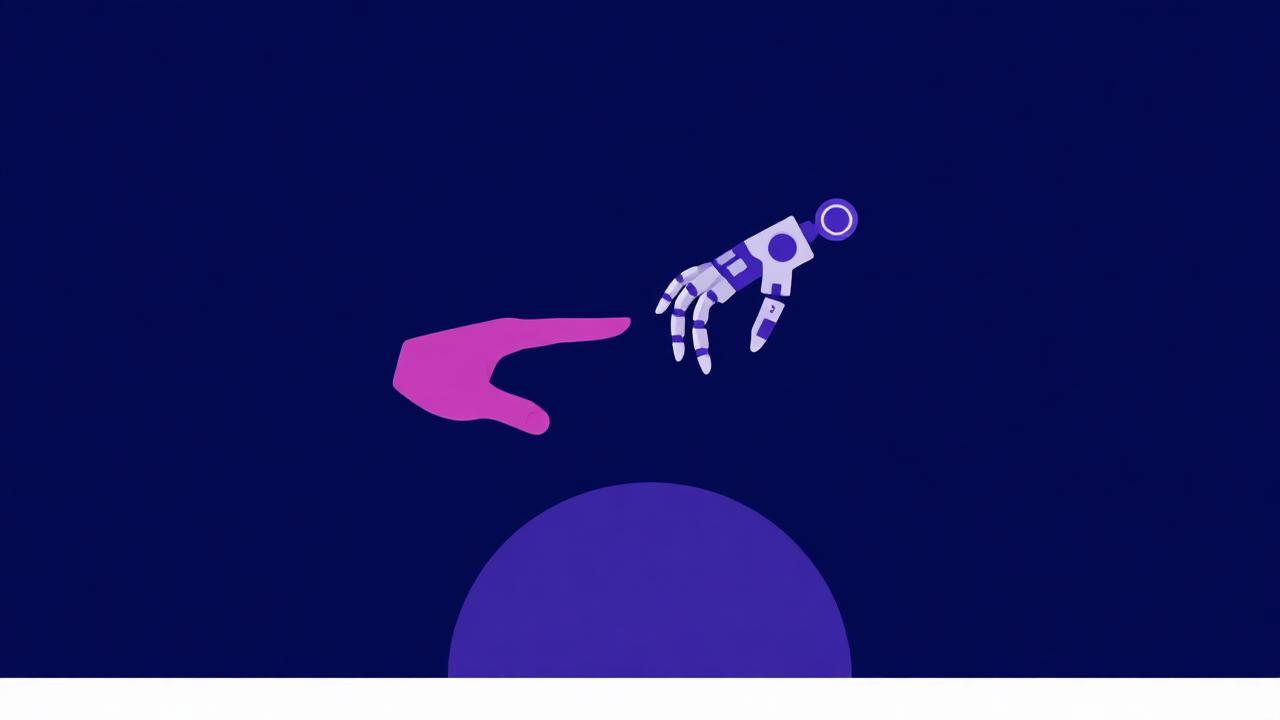
AI is reshaping the job market — but the reality is more nuanced than the headlines suggest. A look at what's being automated, what isn't, and how to prepare.
Artificial intelligence stirs strong emotions. Many see the potential to improve both everyday life and business operations, while others worry about the job market. The question that keeps coming up: will AI take our jobs?
To answer that, we first need to agree on what AI actually is. It's an umbrella term for systems that perform tasks that would otherwise require human intelligence — analysing data, drawing conclusions and communicating in natural language.
The technology is already affecting many industries. In customer service, AI agents answer questions around the clock; in logistics, routes are being optimised; and in analytics, patterns are being found in data that humans would miss.
So: will AI take our jobs? The answer isn't simple. AI automates certain tasks and changes others. Some roles become redundant while new ones are created. It's a transition that has happened before whenever new technology has been introduced.
It's also worth remembering that AI can free people from monotonous tasks, boost productivity, and make room for the work that requires judgement. People are still needed to build, review and steer these systems — and for everything that requires creativity and empathy.
Wondering how AI is affecting your industry? Stay informed and try the technology on a small scale. Continuous learning is the best insurance against change.
The bottom line is that the job market will change — but that doesn't have to be a bad thing. Want to know more about how AI agents can be used in your business? Read more about ZyndraAI's platform.